1. "Toilet Learning," Not "Potty Training"
Montessori practitioners deliberately use the term toilet learning rather than "potty training." This is not semantic vanity — it reflects a philosophical distinction that changes everything about how the process unfolds.
"Training" implies that an adult imposes a schedule, a reward system, and a deadline on a child's body. The child uses the toilet because there is a sticker waiting, not because they understand or value the process. When the stickers stop, the motivation often disappears with them.
"Learning" means the child develops body awareness — they notice the sensation of a full bladder, they connect that sensation to the bathroom, and they choose to walk there and manage the process themselves. The child is the agent, not the subject. This is the same principle that governs every other area of the prepared environment: the child leads, the adult prepares the conditions for success.
2. When It Starts: The Sensitive Period for Order
Montessori toilet learning typically begins between 12 and 18 months — earlier than the conventional pediatric recommendation of 24–36 months. This is not because Montessori pushes children; it is because Montessori recognizes the sensitive period for order and movement, which peaks in this age range.
During the sensitive period for order, toddlers are naturally drawn to routines, sequences, and predictability. They want to do things the same way, in the same place, at the same time. This is the perfect developmental window for toilet learning, because the bathroom routine — pull down pants, sit, wipe, flush, wash hands, pull up pants — is a sequence. A child in the sensitive period for order finds this sequence deeply satisfying. They do not need a sticker to feel motivated.
At Montessori Academy, our toddler program (ages 2–3) actively supports toilet learning as part of the daily curriculum. At our Downey campus, the Nido infant program (6 weeks and up) begins laying the foundation even earlier, with diapering routines that invite infant participation — the caregiver narrates the process, waits for the baby to lift their legs, and treats the diaper change as a cooperative rather than passive event.

3. How the Montessori Bathroom Is Prepared
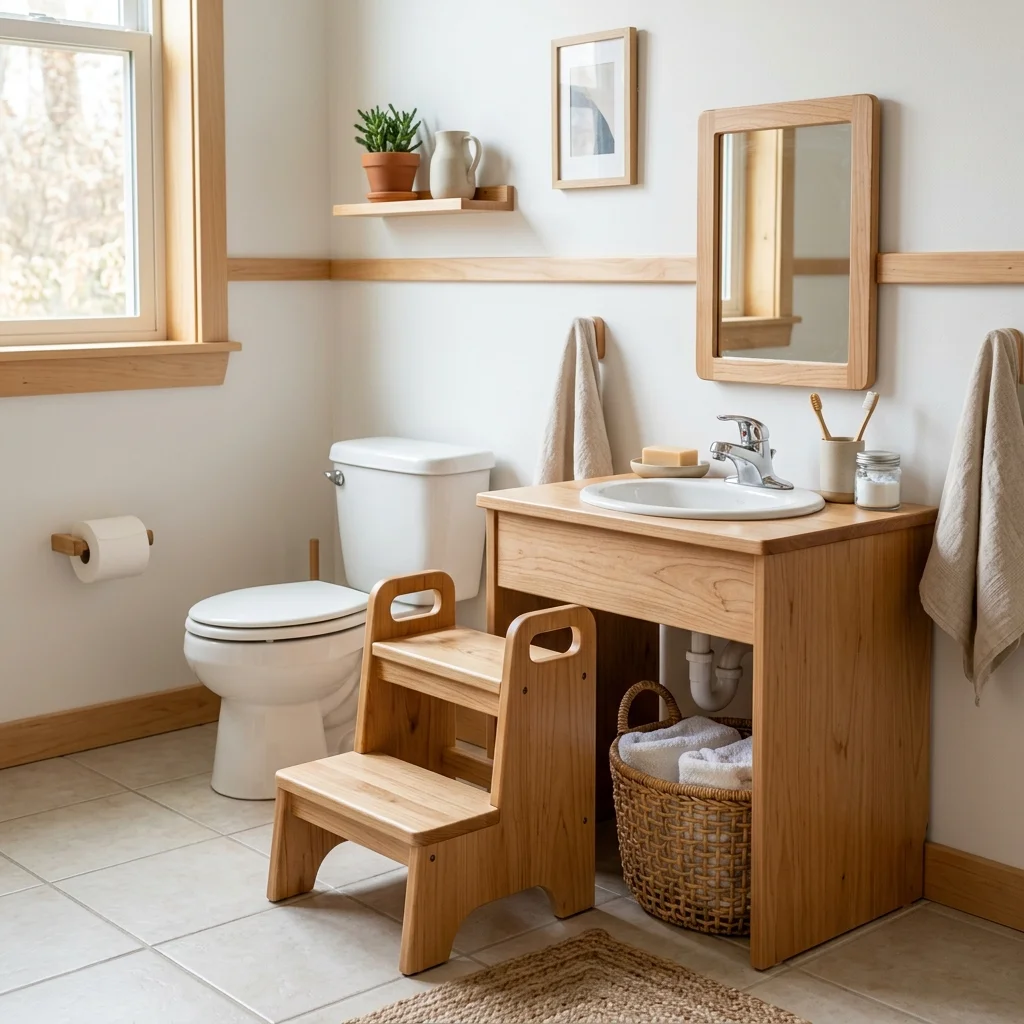
The Montessori bathroom is a prepared environment — just like the classroom. Nothing is at adult height. Everything the child needs is within reach:
- Child-size toilet or a low step stool at the standard toilet
- Child-height sink with soap and a small towel
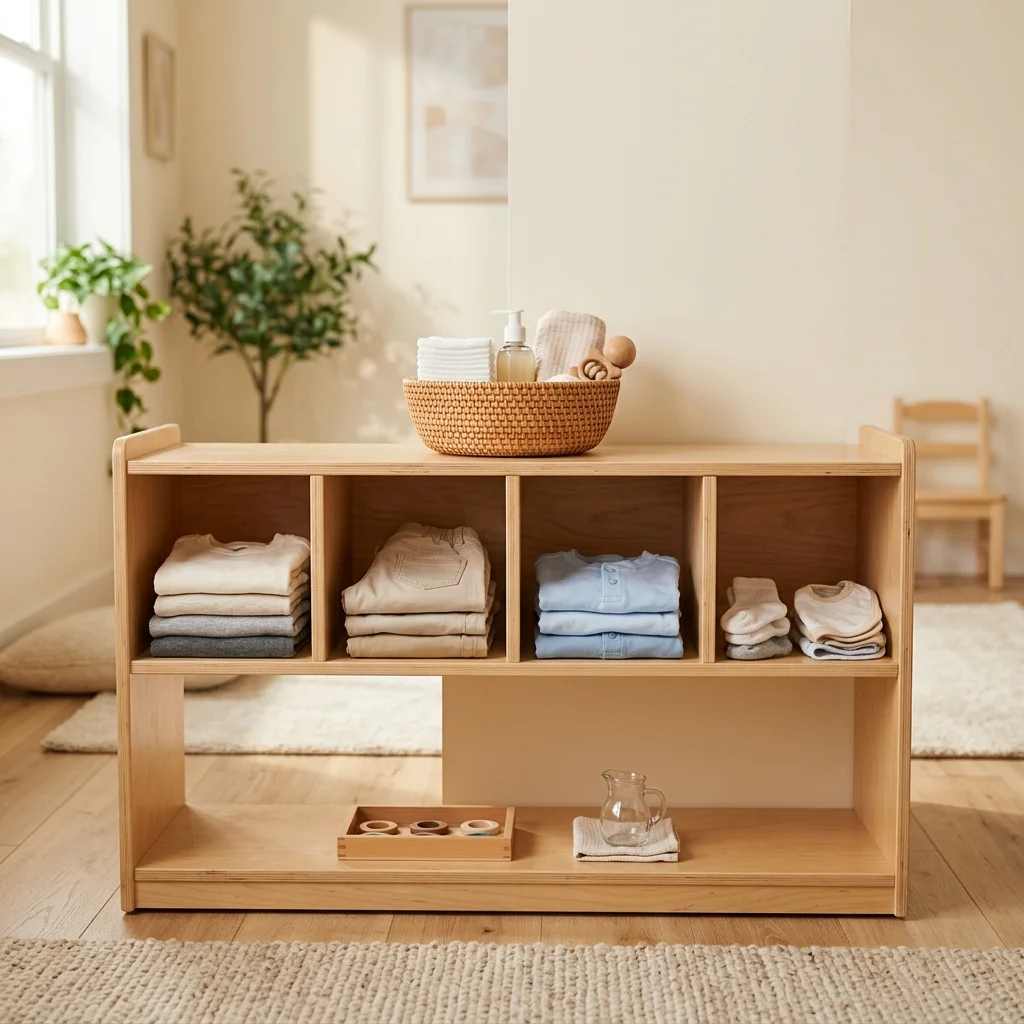
- Open cubby with 2–3 changes of clothes (easy-on/easy-off, elastic waists)
- Small laundry basket for wet or soiled clothing
- No adult gates or locks — the child can access the bathroom freely during the work period
This setup turns every bathroom visit into a practical life exercise. The child is not being "taken to the bathroom" by a teacher — they are walking there, managing their own clothing, cleaning their own hands, and returning to the classroom. Each step builds fine motor control, sequencing, and the confidence that comes from real independence.
4. Montessori vs Conventional Potty Training
| Dimension | Montessori Toilet Learning | Conventional Potty Training |
|---|---|---|
| Start age | 12–18 months (sensitive period) | 24–36 months (pediatric guideline) |
| Motivation | Intrinsic — body awareness, independence | Extrinsic — stickers, treats, praise |
| Adult role | Prepares environment, observes, narrates | Schedules, reminds, rewards |
| Language | "Your body is telling you something" | "Do you need to go potty?" |
| Accidents | Neutral — child participates in cleanup | Often a source of parental frustration |
| Clothing | Cotton underwear from day one; no pull-ups | Pull-ups as a "transition" phase |
| Timeline | Gradual; no deadline; child-paced | Often "3-day methods" with pressure |
5. How Accidents Are Handled
In a Montessori classroom, accidents are treated as neutral, expected events — not failures. When a toddler wets their clothing, the guide's response is calm and factual: "Your clothes are wet. Let's go change them."
The child then participates in the cleanup process: they walk to the bathroom, remove wet clothing and place it in the laundry basket, select clean clothing from their cubby, and dress themselves with minimal adult assistance. This is not a consequence — it is a practical life activity. The child learns that wet clothing is simply a problem to be solved, not a reason to feel shame.
This distinction matters enormously for a child's developing self-image. A toddler who associates accidents with shame, punishment, or parental disappointment may develop anxiety around toileting that actually slows the process. Montessori eliminates this cycle entirely.
6. What Parents Should Do at Home
Home Environment Checklist for Montessori Toilet Learning
- Use a small floor potty or a child-height step stool at the standard toilet
- Dress your child in elastic-waist pants only — no overalls, snaps, or buttons
- Switch from diapers to cotton underwear during waking hours (the wetness sensation is the feedback loop)
- Narrate without pressuring: "I notice you're holding your body — would you like to sit on the potty?"
- Never punish, shame, or express frustration over accidents
- Keep a change of clothes accessible at the child's height
- Maintain consistency with the school routine — ask your Montessori Academy guide for specifics
The most common obstacle to toilet learning is inconsistency between home and school. If your child uses cotton underwear and a child-height toilet at Montessori Academy but returns to pull-ups and adult-managed diaper changes at home, the mixed signals slow the process significantly. Consistency is more important than any specific technique.
7. The Mixed-Age Classroom Advantage
One of the most powerful (and least discussed) factors in Montessori toilet learning is the mixed-age classroom. In a same-age daycare group of 2-year-olds, every child is at roughly the same stage — no one models the finished skill. In a Montessori mixed-age Primary classroom (ages 3–6), younger children observe older peers walking independently to the bathroom, managing their own clothing, and returning to work without adult assistance. The aspiration is immediate and concrete.
Even in the toddler program (ages 2–3), children who are further along in the toilet learning process naturally model for those who are earlier in it. This peer-learning dynamic is unique to Montessori and significantly accelerates the timeline without any adult pressure.
8. Cost, Enrollment, and Subsidies
Montessori Academy does not require potty training for enrollment at any campus — including our Primary program (ages 3–6). This is a significant differentiator from many LA-area preschools that refuse admission to children in diapers.
Tuition at our West Adams campus is approximately $1,675–$1,850 per month for full-time enrollment (7:00 AM – 6:00 PM, year-round). At our Downey campus, the majority of families enroll through MAOF, CCTR, CSPP, CalWORKs, or Head Start subsidies — often at no out-of-pocket cost. Culver City rates are posted on the campus page. See our full Montessori Preschool Cost in Los Angeles guide for details.
To understand the full daily experience your child will have, including how toilet learning fits into the broader schedule, read A Day in the Montessori Classroom. To compare Montessori Academy's approach with other options, see Montessori vs Daycare or Montessori vs Traditional Preschool.
Frequently Asked Questions — Montessori Potty Training
What is the Montessori approach to potty training?
Montessori calls it "toilet learning." The child develops body awareness and independently uses the toilet when ready — no stickers, no rewards, no punishment. The bathroom is a prepared environment with child-size fixtures, accessible clothing, and a calm, neutral response to accidents.
At what age do Montessori children start toilet learning?
Typically between 12 and 18 months — during the sensitive period for order. Children in this window are naturally drawn to routines and sequences, making the bathroom routine developmentally satisfying rather than forced.
Does Montessori Academy require potty training for enrollment?
No. We actively support toilet learning as part of the curriculum in our toddler program (ages 2–3) and do not require it for Primary (ages 3–6) enrollment either. At Downey, our Nido accepts infants from 6 weeks.
Does Montessori use reward charts or stickers?
No. External rewards create extrinsic motivation. In Montessori, the reward is intrinsic: the satisfaction of independence and managing your own body.
How do teachers handle accidents?
Accidents are neutral events. "Your clothes are wet. Let's change them." The child participates in cleanup — carrying wet clothes to the laundry basket, selecting clean clothes, and changing independently. This is practical life, not punishment.
What should I do at home to support toilet learning?
Use a small potty or step stool, dress in elastic-waist clothing, switch to cotton underwear during waking hours, narrate without pressure, and never shame accidents. Consistency between home and school is the most important factor.
How long does Montessori toilet learning take?
Most children who begin at 18 months achieve daytime dryness by age 2.5–3, but there is no fixed timeline. Montessori Academy never sets a deadline — each child's pace is respected.
What if my child is 3 and not yet potty trained?
Not a problem. The mixed-age classroom is itself an advantage — younger children observe older peers using the bathroom independently and are naturally motivated. There is no stigma at Montessori Academy.

Tour Our Toddler Classrooms
Toilet learning is just one part of the Montessori toddler experience. Come see how our prepared environment, practical life curriculum, and 1:4 ratio create an environment where independence isn't just encouraged — it's the entire point. Morning tours available at all three campuses.
Schedule Your Campus Tour